GRAPHSY 2026
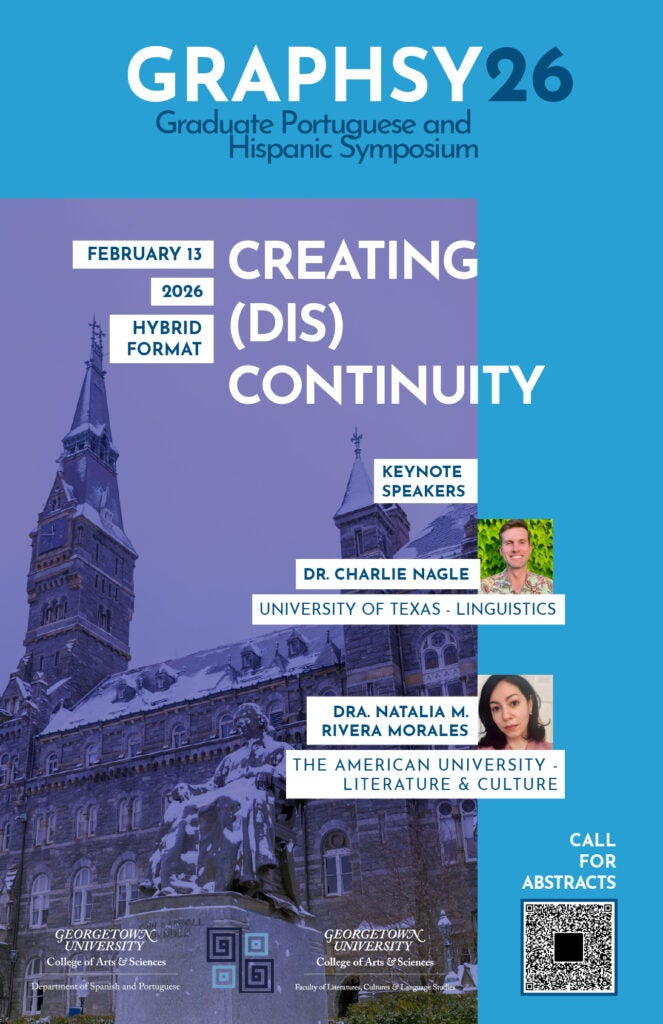
Creating (dis)continuity / Creando (dis)continuidad / Criando (des)continuidade
18th Graduate Portuguese and Hispanic Symposium (GRAPHSY)
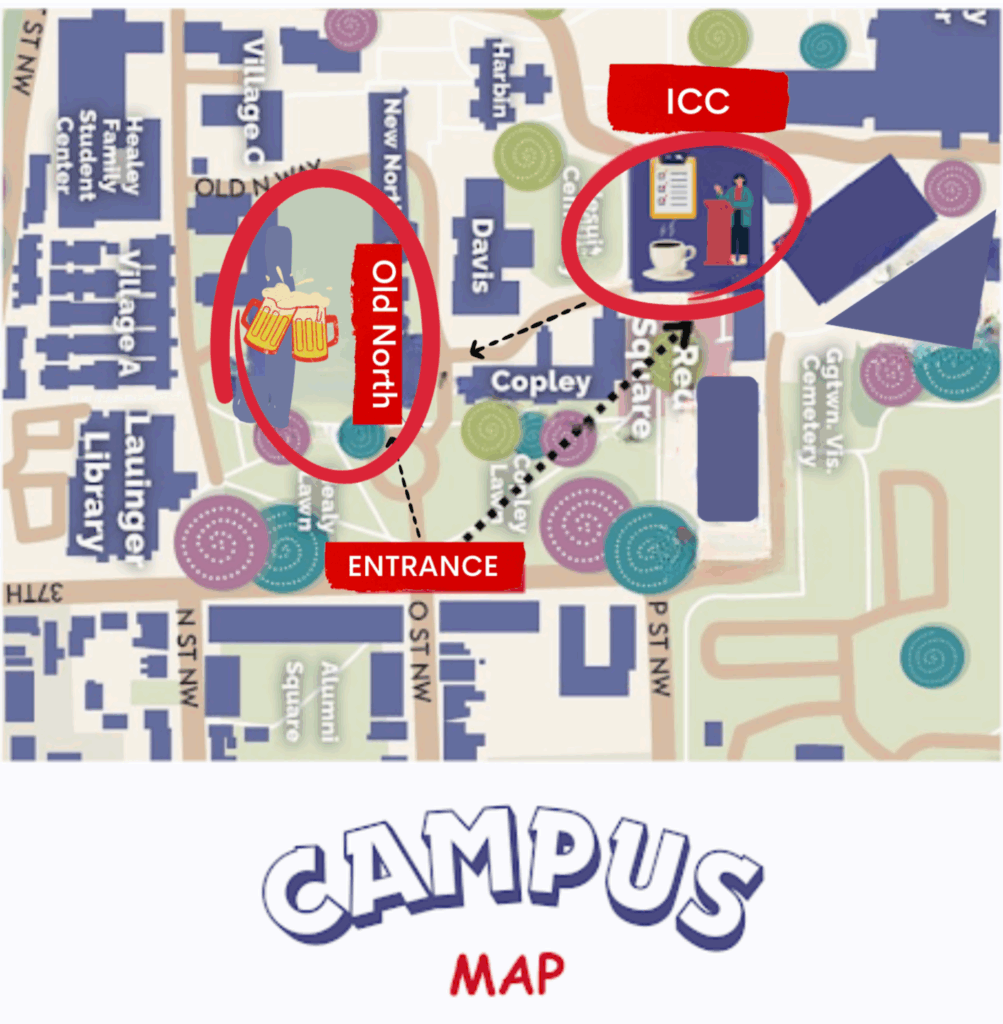
Conference date: February 13, 2026 (Hybrid)
While in-person participation is greatly welcomed, we hold the safety and well-being of our attendees and presenters in the highest regard. Therefore, we encourage participation through the mode attendees feel most comfortable. Questions? Email us at graphsy@georgetown.edu.
GRAPHSY 2026 invites participants to reflect on how the interplay of continuity and discontinuity shapes linguistic, cultural, and literary analysis and criticism; how new interpretive frameworks contribute to emerging movements in linguistic and literary studies; how burgeoning subfields inform the development of bi- and multilingual identities; and how breaking the norm in academic environments presents itself as a practice that builds more than knowledge; among other issues.
This year, for literature and culture, we are seeking papers that engage in the discussion of continuity and discontinuity as approaches that challenge the normative practices in academia and contemplate notions of temporality within our fields. In an increasingly normative academic environment, discontinuity emerges as an ethical concern that demands to be considered, encouraging thinking outside the box and reframing what we take for granted as truth. We invite you to create (dis)continuity by posing and answering questions about non-normative forms of knowledge production or perceptions of time; the disruption of orthodox interpretations of cultural manifestations; and creative, imaginary, and utopic readings of canonical and marginalized texts. We invite work that uses (dis)continuity as a lens to examine how languages, communities, and identities are shaped—whether through processes of preservation, tradition, and transmission, or through rupture, innovation, loss, and interruption. We welcome works —from medieval to postmodern, including fiction, theater, film, poetry, and memoirs— that generate noise, create discomfort, and break away from the limitations imposed by the Western models of thought.
For linguistics, we are particularly interested in how contemporary understandings of continuity and discontinuity open up new discussions and shape language(s) and linguistic research. We hope to explore the oscillation between the classic and the novel; the interplay between the perpetuation of classic methods for linguistic knowledge creation and the innovation of new approaches. We invite work that uses (dis)continuity as a lens to examine how languages, communities, and identities are shaped—whether through processes of preservation, tradition, and transmission, or through rupture, innovation, loss, and interruption. Some areas of particular interest include presentations of multilingualism, diachronic perspectives, sociolinguistic variation, corpus perspectives, and methodological reflexivity.